Tuesday, 23 April 2013

Repair work

Hi folks, sorry I have been absent for a bit, just busy.

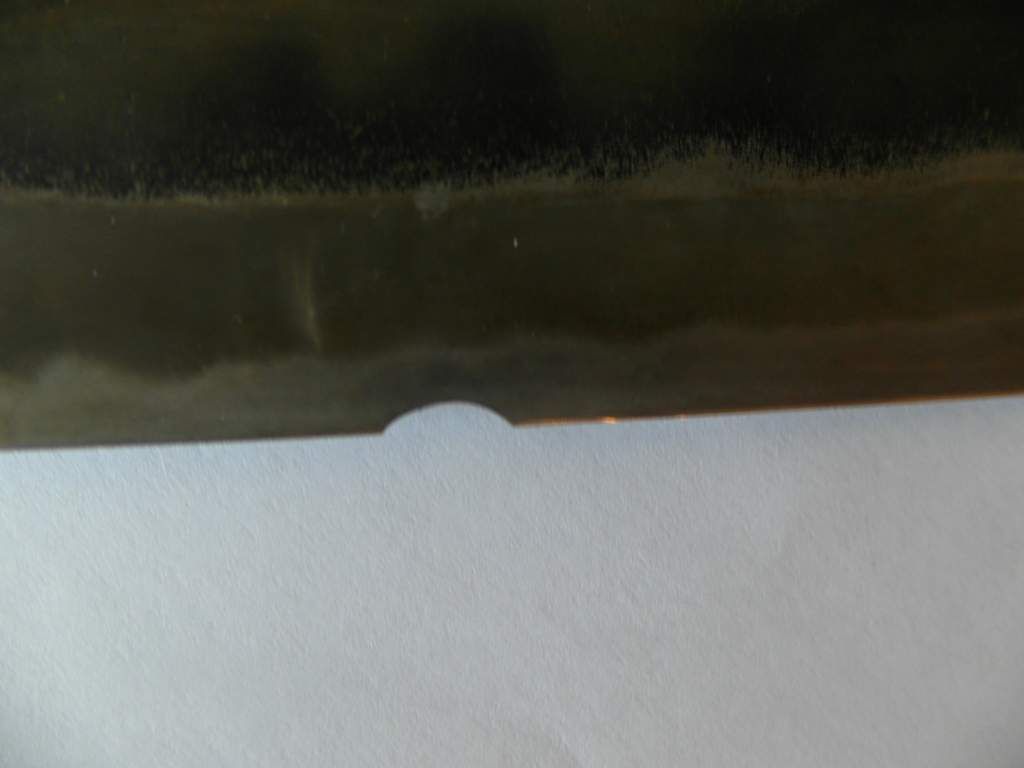
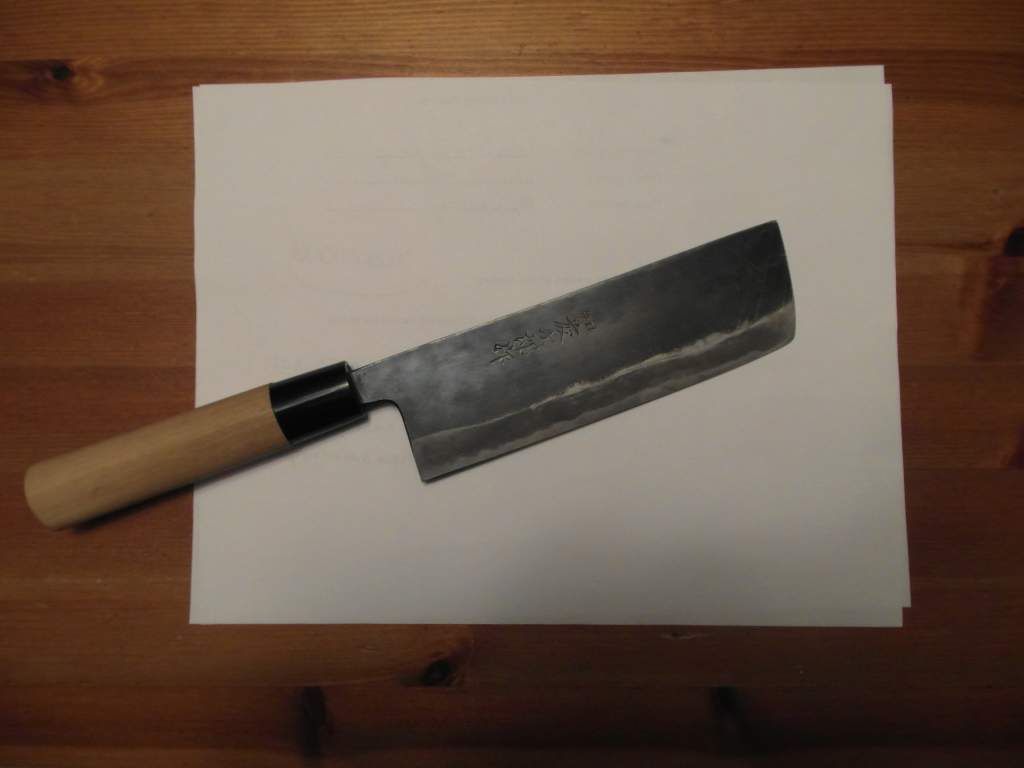
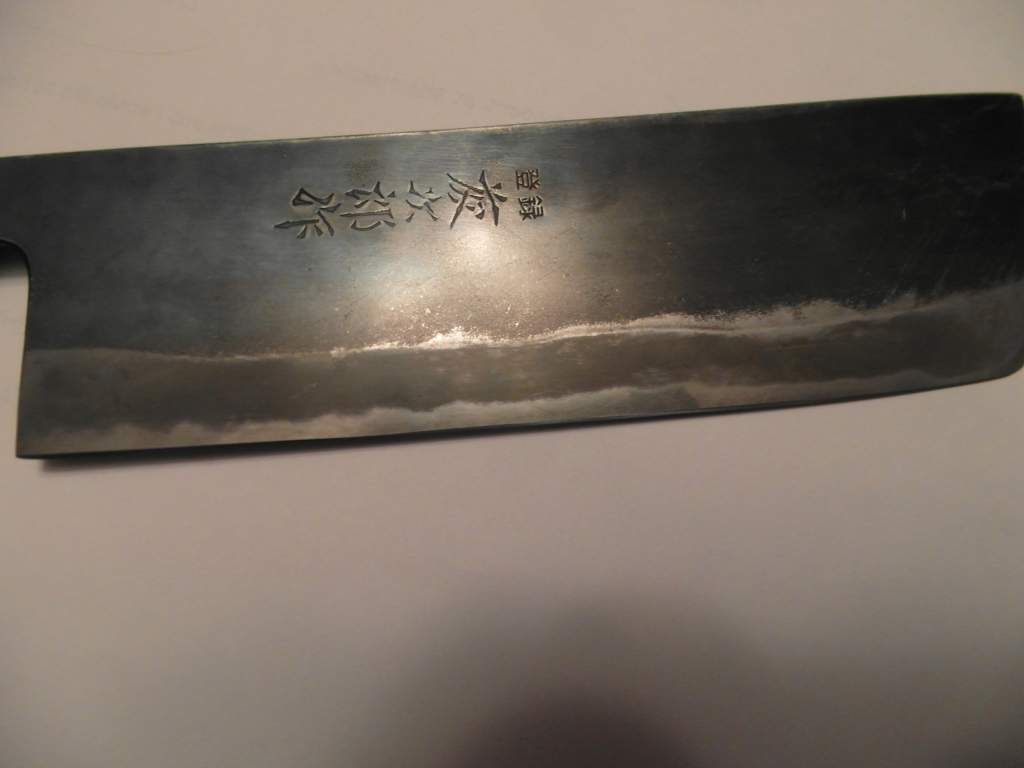
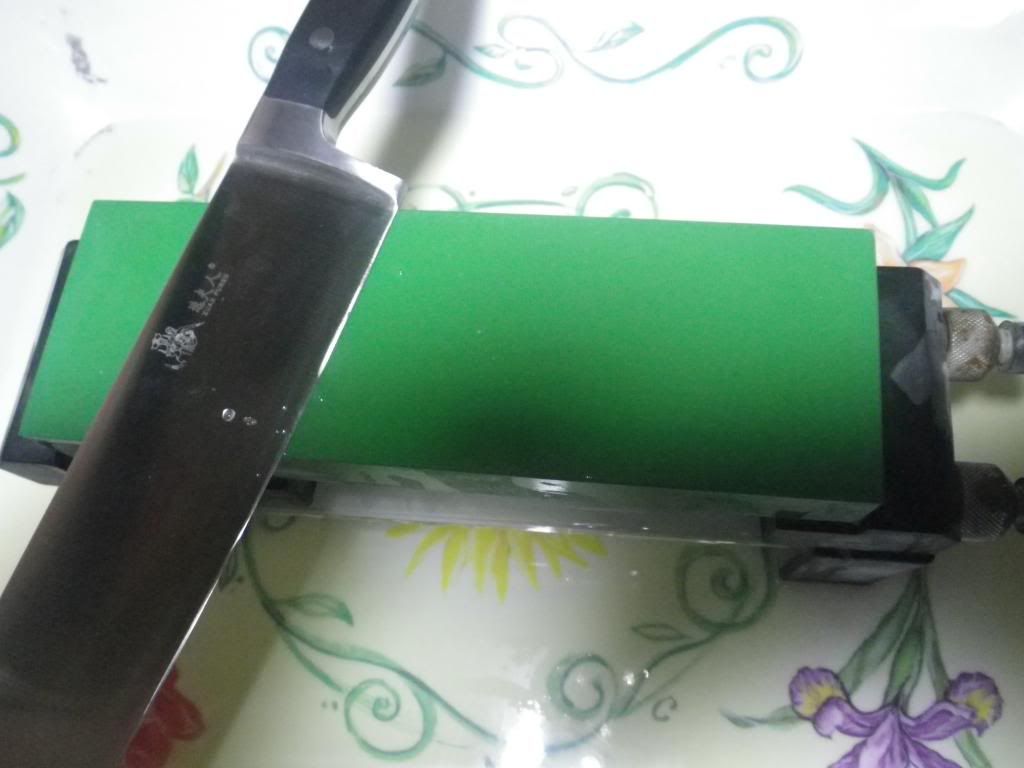
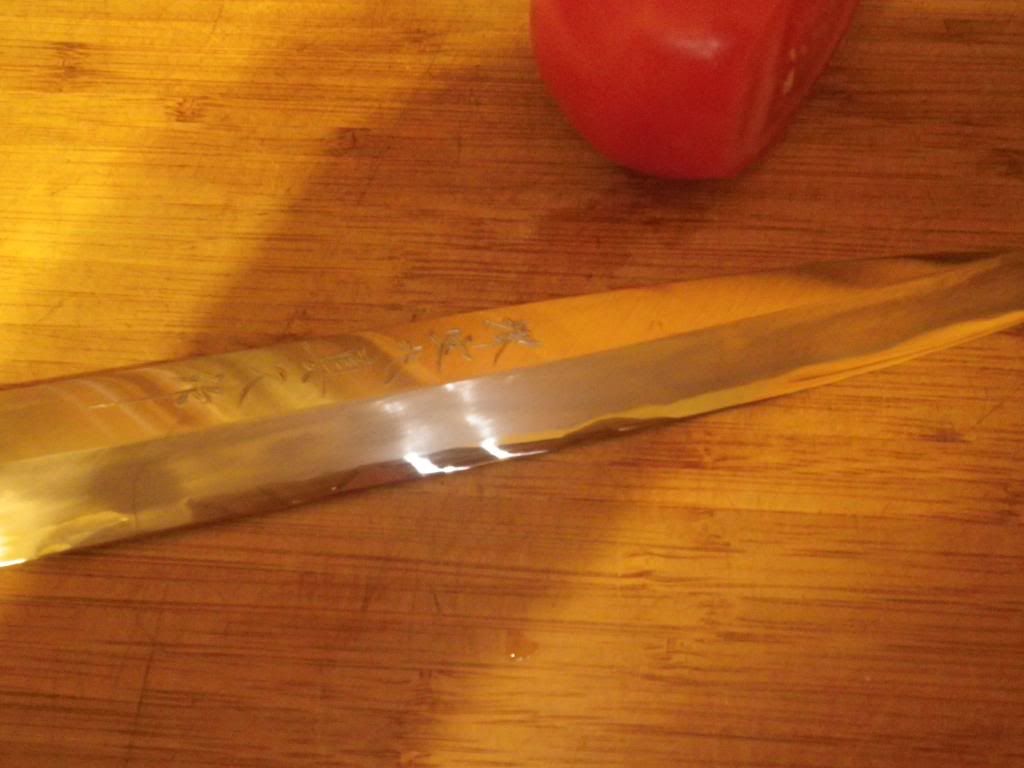
Here is some pictures of a very nice knife, a hand made Japanese Nakiri that had a chip in it. This goes to show that even these knives can take some damage but they can also be repaired. Don't despair if this  happens to you, almost anything can be salvaged.

Here is how I received the knife:


This is not necessarily an act of neglect or abuse, the owner loves her knives, these things happen.


After some tender loving care, and doing what I love to do:


So if this happens to your knife, just give it to me and I will repair the edge and then sharpen it.

The cost of this type of work varies but if you are regular customer and I have your knives to sharpen anyway and one has some damage, most of the time there is no extra charge.

Thank you for reading my BLOG, it means a lot to me.

Peter


Saturday, 30 March 2013

Serrated Knives

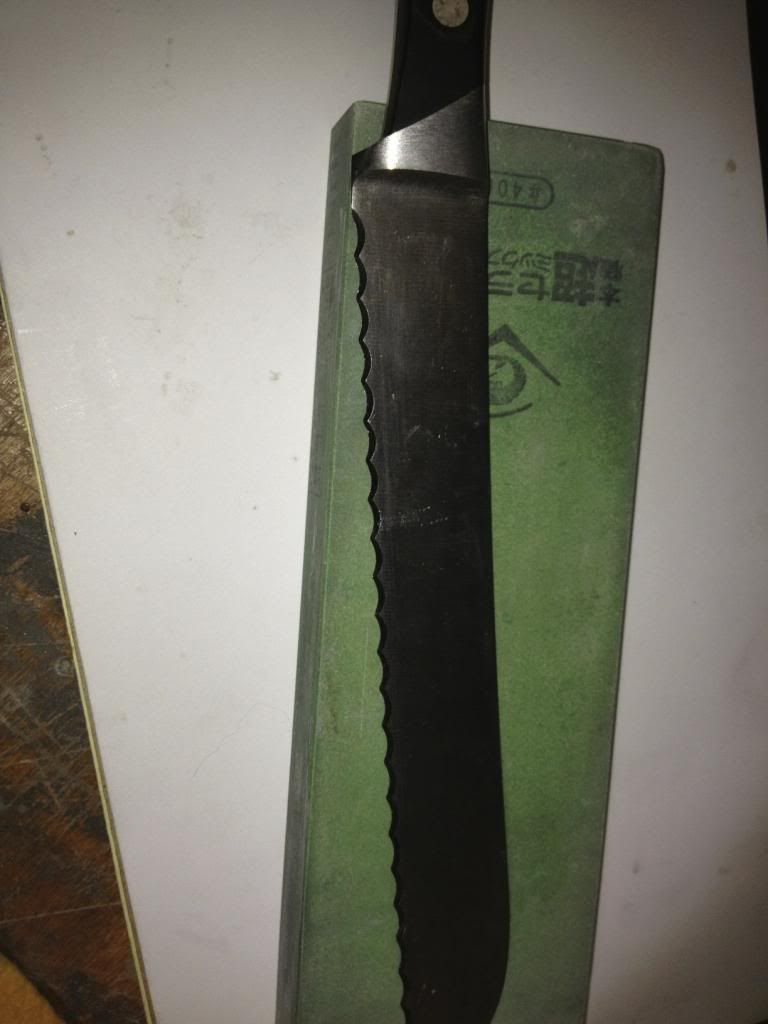
Most folk own a serrated knife for cutting bread, or a smaller one for tomatoes

Serrated knives excel at cutting crusty bread, no doubt about it, when they are sharp that is.


Like any other knife purchase however, when you buy one, you need to think about how it will get sharpened. Fortunately, serrated knives tend to stay sharp for a year or so but like all other knives they get dull. However, unlike other straight edged knives, they are difficult to sharpen.

I don't know anyone else who sharpens these knives to be honest, at least not properly. You should know however that over time, over many years the serrations just wear down to little nubs and I can't sharpen it, it is time to put those ones to rest. (Unless you want me to transform it, more on that later)

I sharpen each serration individually with a series of ceramic rods and micro abrasives and a diamond cone that is fantastic for small serrations. When I have raised a burr on the flat side of the knife, I sharpen the flat side at almost zero degrees, to remove the burr.

Here is my advice on Serrated Knives. Don't buy expensive ones, get a $30.00 bread knife, or less and then just replace it when it is dull. You can easily get a year or even more out of it.
I personally don't use a serrated knife but they are really good for cutting  bread.

The serrated knife performs well because the high points of the serrations (assuming the high points still exist and are not worn down) touch the material first. So a higher pressure per area is gained by these multiple points (tips of serrations) than a straight edged knife. This is all good for the first year, after that, the serrations get rounded over.

If I were to buy a serrated knife, I would look for a Victorionox, something inexpensive and just throw it away when it is dull.

However, I can transform a serrated knife into a slicer, I just remove the serrations and form a new edge and then sharpen it like any other knife. COOL eh.

Saturday, 23 March 2013

Starting Out

Hi,

Ok you want to learn to sharpen and all you need is a water stone. You already have some dull knives, we all have those.  The fact that you are reading this means you have the most important ingredients, the desire to learn, and an interest that may develop into a Passion.

You don't need to go out and spend a lot of money to get started, in fact, you easily get your knives sharper than new with one stone and a flattener of some type so less than $100.00

Which stone to get first you ask?

1, 000 Grit Japanese Water Stone
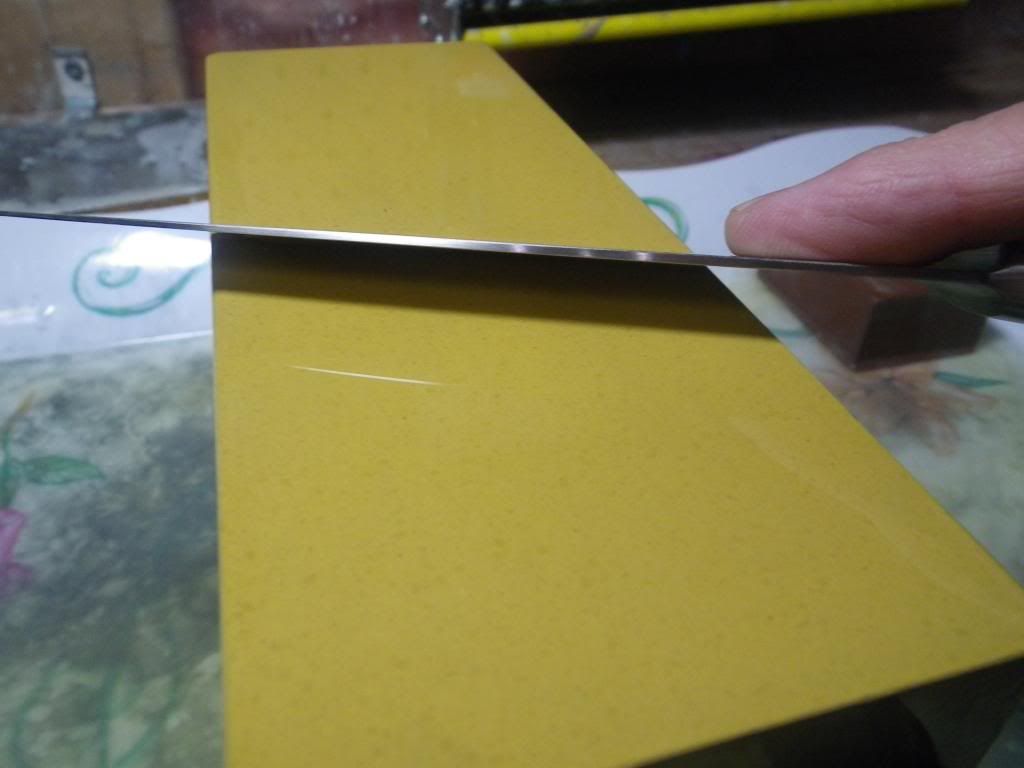
If you are just learning a coarse stone, which is in the 400-600 range can be a little dangerous. This stone will remove metal quickly, it is a wonderful stone to own, but when first learning free hand sharpening, play safe and start with something in the 800-1200 range. Now if your knife is very dull, it will take some time to raise a burr, the process of removing metal to expose that fresh edge, your target, will be slower but safer. Use this medium grit range to get comfortable with your angle and start on a PRACTICE knife. Don't take out your favourite knife and start.

Ideally, you will want 3 stone, coarse, medium and fine,  400, 1000, 4000 for example or even up to 2,000 grit is perfect for just about all your needs in the kitchen.

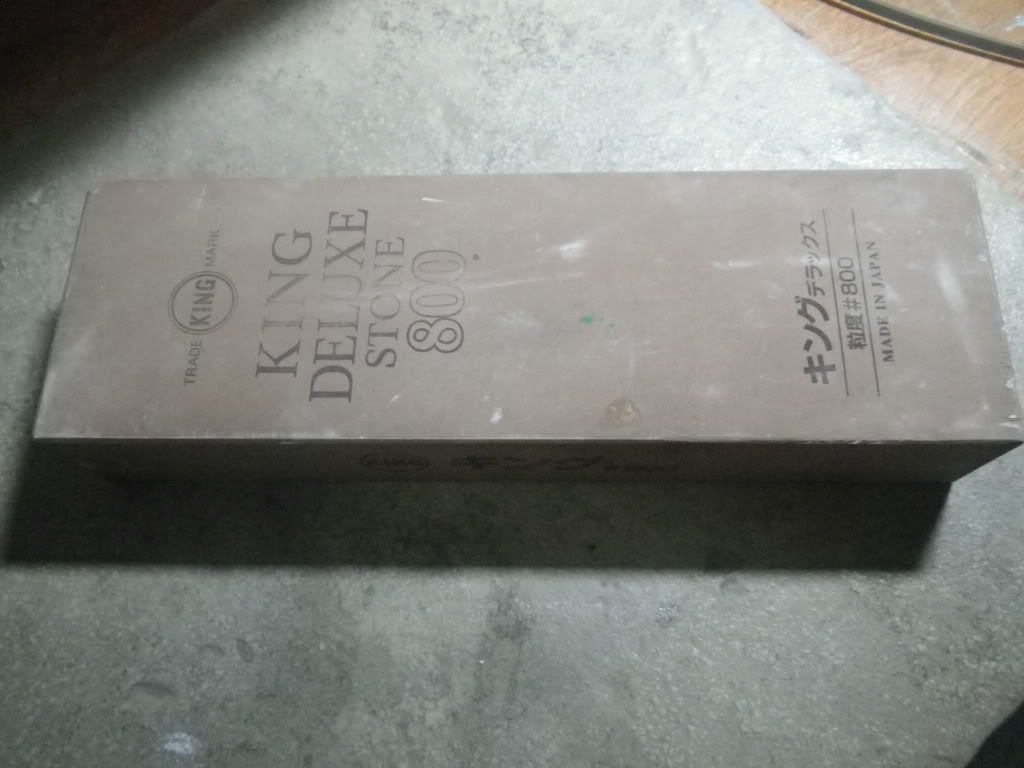
So you could go to Lee Valley and pick up a King 800 or King 1200 for about $30.00 and start your journey.

Next I will explain how to keep those stones Flat.

Thank you for being here.

Thursday, 7 March 2013

Traditional Japanese Knives

MAC Yanagiba

Now friends if you want a completely awesome knife, you may wish to choose this MAC Yanagiba, this is a single beveled knife, so only sharpened on one side. It is designed for cutting fish, the wide bevel flows from the Shinogi Line which is the starting point for the  bevel down to the edge. The salmon for example will slide up the bevel and separate at the Shinogi line, extremely precise cuts are capable with this beauty. These quality blades, only available at Paderno in Bayer's Lake are a blend of two metals, you can see where they meet and the harder steel is close to the edge for strength and in this case for beauty. 
In terms of sharpness, this is perhaps the sharpest knife that I have ever seen, after I sharpened that is :)

Very cool knife

Tuesday, 5 March 2013

ANGLE - I'm afraid

I think the most common fear of sharpening is that the knife will be permanently ruined because you did not sharpen it at the exact same angle that the factory set.

Well here is something to think about:

What are your options?
1. Try sharpening it anyway and do your best to keep a steady angle, regardless of the factory angle; or
2. Just keep using it dull, that way it won't be ruined.

Do not concern yourself too much about the angle. There is only one thing to be concerned about when learning to sharpen a knife by freehand. CONSISTENCY.

So you hold the knife at an angle that you THINK is similar to the factory set angle which is likely about 20 degrees. As long as you can hold that angle and keep it steady as you sharpen and as long as you are hitting the edge of the knife you will succeed. It doesn't matter if the angle you are using is 22 degrees of 18, as long as it isn't 14, 22, 18, 25 and so as you move the knife.

I've already explained the sharpie trick so this will guide you but again, do not be overly concerned about keeping the same angle. You won't notice. 


So assume that you Wusthof or Henckels is new or never been sharpened beyond the factory and the angle on it now is 22 degrees. So you want to match that 22 degrees on either side of the knife. So a 44 degree included angle. Just do your best to hold it, an inch will give you a 20 degree angle on an 8inch chef knife.  It's your knife, sharpen it at an angle that seems natural and feels comfortable. Over time, muscle memory will kick in and you will automatically hold the knife at that same angle. BIG DEAL if it is a degree or even 4 degrees off.

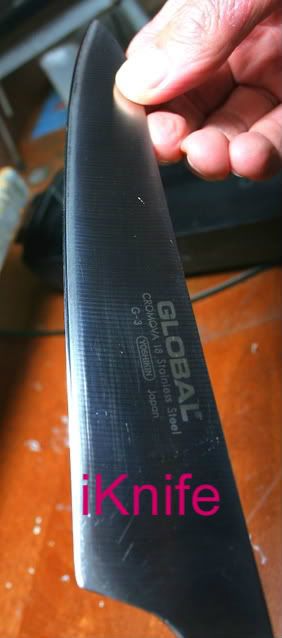
I have purposely changed the angle on many knives, and every one of them still cut.  Who the heck can pick up a knife, and say, ok that was sharpened at the factory at 19 degrees. If you read the GLOBAL Knife sharpening instructions online it will say to hold the knife between 10-15 degrees. IT does not say, "hold the knife at 15 degrees exactly or your warranty is void"

Global Sharpening Instructions

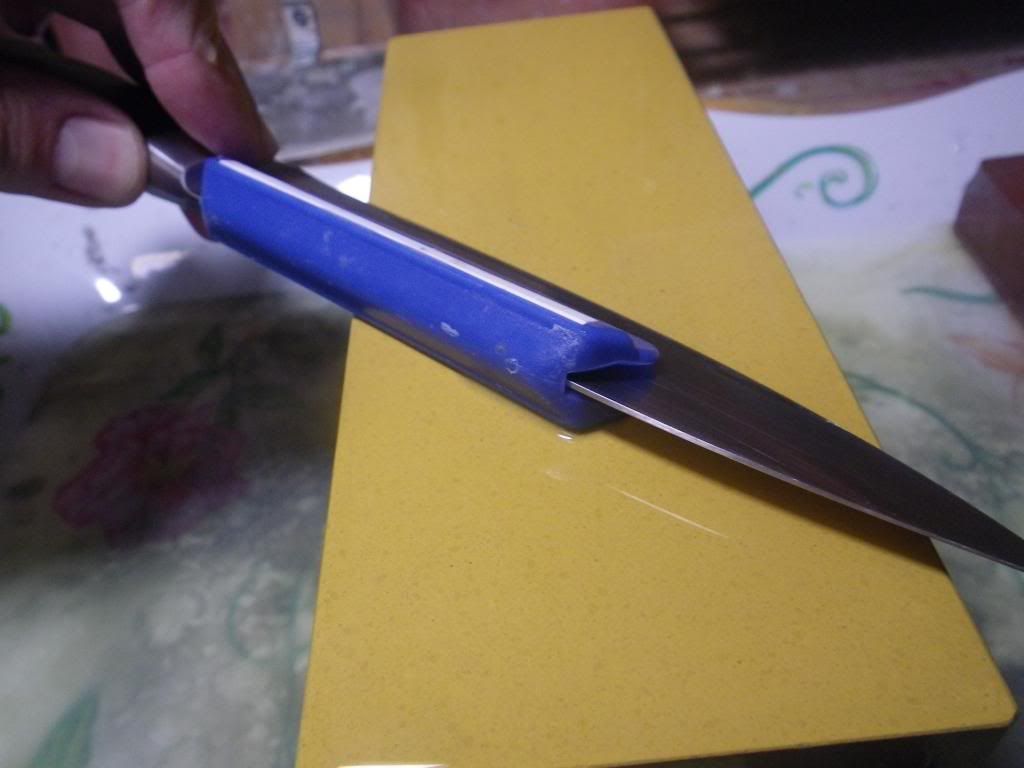
Here is where I hold the knife:
So what angle is it.......I don't know, probably 19 degrees. The point here is that I know that I am hitting the edge, removing fatigued metal and sharpening this knife. I don't care if it is at 19 or 21 degrees and neither does the owner.

My Angle

Now you can purchase a device like this one that will set the angle for you:

However, I have never used this because it just gets in the way but it is handy for showing what a 19 degree angle looks like.

The whole point of this is to talk you out of the notion that the wrong angle will ruin the knife. That is completely untrue unless you hold the knife at 90 degrees or something.

This is easy folks:

It's a leap of faith......jump in.


I want to learn to sharpen my own knives

Congratulations, sharpening knives by hand is THE most rewarding experience that I have ever encountered.
It is relaxing, inexpensive and really not all that difficult with patience, practice and then some more of each.
The coolest thing about knife sharpening is that you can make your knives sharper than when you bought them, right at home. Once you get the hang of it, you'll be sharpening every knife you can get your hands on.
This is what you need:
1. A knife - it's dull.........even if you just took it out of the box it could get sharper, within a month it will definitely need to be sharpened. (MAC knives are one of the sharpest OOTB (Out of the box) that are available, these will be fine for a while)
2. Japanese water stones (oil stones work yes, I use and recommend water stones). You NEED one but you should have two or three. If going for two which is fine, you need a medium stone, about 800-1200 grit and a fine stone, 2000 and up. A coarse stone removes metal fast (500 grit and below) so you need to be careful with these when learning.
3. Watch the Videos by Jon Broida that I have linked earlier, or just go to Japanese Knife Imports and select his media links. His are the best sharpening videos that I have seen. I have shared dozens of emails with Jon and I trust him completely. I sharpen knives as described in the videos and it works. or, go to YouTube and search for KORIN knife sharpening, another excellent demonstration.
4. If I was just starting and I was on a budget I would go to Lee Valley and pick up an #800 grit King Stone and a #2000 grit Bester Stone.
5. With just these two stones, you can take your dull knives to the point where you will not believe is possible. If you want to further refine the edge, get a #4000 grit Imanishi stone too and the edge and polish that comes from that will blow you away.

When you are ready to start, if you have any questions just send me an email at sharpknives@me.com.
I can walk you through it, if you want to come and visit me for a lesson, (best option) that is also very possible. Private lessons are available at very reasonable rates, cheaper than most gadgets.

I can help you, you can toss away any gadgets that you own.......they are gadgets and you don't need them, they are nothing more than Frustration Builders, you are fooling yourself if you think they work. (Ask me how I know this :)  )

I'm there for you, if you want to learn you know how to get hold of me. 902 225 0579

Monday, 11 February 2013

Steeling - What exactly is it?

One of the common problems I encounter is the understanding of Steeling, or the misunderstanding of it I should say.

I'm going to put this right out there now....Steeling does NOT sharpen a knife.  Now I know what you are thinking, "this guy doesn't know what he is talking about, I'm outta here"

Before you leave, why not read what I have to say, what have you got to lose?
Remember, I am obsessed with knife sharpening, this has led me to be driven to understanding all there is to know about it and after 35 years, I'm starting to get below the surface.


OK before you can understand how to get a knife sharp, I think you need to realize what makes it dull. This will help you realize that the Steel is going to maintain a sharp edge for a period of time, once that time is over you need to put away the steel.

What makes a knife dull?

You have a brand new knife in your hands, or one that has just been professionally sharpened.
The cutting Edge (We will call it the Edge from now on) is perfectly straight. Two planes have intersected at one point (Edge) and that is what makes it sharp. You could take a metal ruler and grind down both sides until they meet and you would end up with a sharp edge.

Now the first moment you use that knife, you take it out of the block for example, or out of the case and  you cut something. Depending on the quality of the steel, that first cut could decrease the sharpness of the knife. Not enough to tell but if you are cutting something tough, and the knife impacts the cutting board, it will happen. (Now I know you are not using a glass cutting board..that is a knife killer)

So imagine cutting every day, the knife edge is put to the test and it hits that board, gently but it still hits it and that is going to do something to the edge.

The edge starts to roll over in places, over time, it rolls over in many places, you no longer have an edge that is perfectly in line. The metal is fatigued at the edge and it is just natural for it to bend a little.
That fatigued metal is what is making the knife dull.  Every knife will do this.

So what does a steel do?


The Steel or Ceramic rod (Ceramic is the best) will re-align the edge, basically, if used correctly, it will move that fatigued metal back to where it should be. The metal is still "tired" but it is back in place, so now the knife is sharp again. 

Let's assume that you have watched the video that I put a link to on my website and that you are steeling the knife correctly. Just like the picture at the top of this post. Also......let's assume that the steel yo have is a good one and keep in mind that the ones that come with a block of knives are usually not up to par. They are worthless in fact, unless you got a ceramic rod like the one Global sells. (Cucina Moderna has these ones, expensive but very good. Paderno sells some very nice steels as well.

Now how often should you steel your knife......every time you go to cut something, before you use it is the answer. Keep the steel handy so you don't need to go fishing for it every time. Keep it in a place that your wife doesn't like it to be, out on the counter or something :)

NOW.....here is the important part my friends.....that steel, even if used every day will not keep the knife sharp forever, a year at the most, and that is pushing it. 


YOU NEED TO REMOVE METAL TO SHARPEN A KNIFE.......that fatigued metal, after a while, going back and forth, it just can't stand up to the job anymore folks, it's tired out and needs to be replaced. The edge is not as strong obviously as the rest of the knife.  So that is where I come into play, I remove that metal from both sides of the knife and then re-fine the edge so it is as good as new and in most cases, better than new. 

Now I know some folks still don't believe me. Picture that steel rubbing up against edge, sometimes over years and years, do you really think it is making a difference?  Is it possible you will get to the point where you are not only not sharpening the knife but you are damaging the bevels?


I put this out there because as I said, it is very common misconception, folks tell me they've been steeling their knives for years and that is warning sign to me that the knife is in serious need of a sharpening. 

GOOD on you for steeling or Honing the knife, but do it properly and most importantly, remember that it is not a knife sharpener, I AM A KNIFE SHARPENER.  Over time, sometimes in 3 months and at the most, a year, that metal must be removed.

Removing the metal to sharpen a knife doesn't hurt it, the knife will still last an eternity if cared for.

Here is a really good video on the subject, now Alton in the video does 5 strokes per side, I do 1 stroke per side, i..e alternate sides between strokes but it doesn't matter. His method is just as good.

It's an excellent video.

CLICK ON THE LINK TO BE ENLIGHTENED


Enjoy