Monday, 2 September 2013

Thinning

So what is thinning anyway,  what's the big deal with thinning?

Is it important??

HECK YEAH!

Simply put, and I am not putting this in simple terms because I don't think you would understand it otherwise, I'm putting it simply because the concept and technique is quite basic, nothing complicated about it but not many people that I meet are aware of the importance of it.


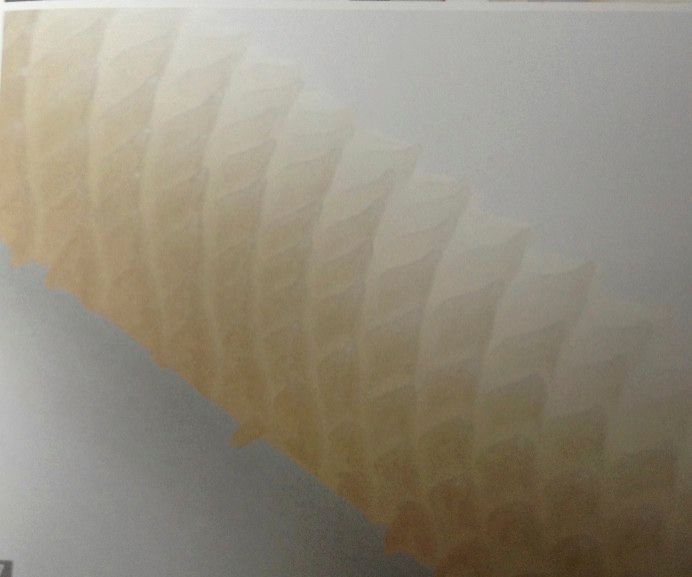
So imagine sharpening that Primary Edge Bevel and every time you do it a little metal is removed, that is what is supposed to happen, so that is a good thing.  Well imagine doing that often, over time, that edge would become quite thick, it would move up into the secondary edge or back bevel as depicted above. The angle of the knife, the factory angle of 20 degrees for example would become wider and wider.  Basically the knife becomes too thick and in fact most knives are too thick when they come from the factory.  

So Thinning is the process of sharpening the secondary bevel (back bevel), you are not really sharpening it but removing metal in that area by careful positioning of that portion of the knife on the stones and grinding away the unwanted metal, the metal that is making the knife thick. 


So how do you do it you ask?  

If the primary edge is sharpened at let's say 20 deg (typical of most European knives, Grohmanns) well to thin the knife you would lay the knife down closer to the stone, almost flat on the stone and go to work, so you are working at 15 or 13 degrees. You are not making the knife sharp now, you are thinning and making the knife much more effective. You can  polish this Relief Face or Relief as it is called to a very high polish if you like, if you have the patience and right water stones, this Relief Face can become like a mirror.  I really love doing this to a knife, it's pretty cool.
Remember, you are not trying to make the knife sharp during this process, you are thinning the knife, you can do this to a new knife.

Once you have the Relief Face accomplished, now you can sharpen the knife by raising the angle slightly and you will find the knife will become exceptionally sharp and it will become sharp very quickly. I'm telling you, this is the way to make your knife sharper than you have ever seen before. 
Also, once thinned, you can just sharpen the primary edge the next time, just keep an eye on the thickness of the knife as time passes. 

I know I make it sound simple and it isn't as simple as it seems but I firmly believe that a knife is meant to be sharpened. 

If you go out and get yourself a water stone and try to sharpen your own knife, GOOD ON YA, so what if it doesn't work, at least you tried. It was dull anyway.  (Bring it to me, I'll fix it for you).

So thinning is essential to maintain the geometry of the knife, to keep it an effective too.

NOW this is why gadgets do not work, the electric sharpeners for example. Do you think you can create a Relief Face with an electric knife sharpener??

Knife sharpening is cool, it is fun and extremely rewarding. The Relief Face (thinning) is somewhat advanced, you don't need to worry about it at first. There is sharpening and then there is Extreme Sharpening. 

Bottom Line - If you have one water stone and you sharpen your own knife, regardless of the results, you need to pat yourself on the back for attempting. One lesson could make a huge difference but there are many great videos out there. Check out  Jon Broida on You Tube or visit Japanese Knife Imports. Jon is a very nice man and gifted sharpener. His videos are exceptional.


Bob Kramer Sharpening Kit

Folks, I just picked up the very nicely put together sharpening kit by Zwilling and Bob Kramer.
It is the complete system except for a strop but that is easy to get around.

Sharpening Kit

The video linked above has it all and I have had the pleasure of trying it out. The sink bridge is very nicely made, it looks good too, made of bamboo. The 3 stones are the perfect combo,  the 400 is in my opinion the cornerstone of any sharpening system. To be more accurate a coarse stone is the critical component and the 400 stone is a perfect choice, the 500 grit stone is great as well.

These are Chosera stones and they are mounted on glass and with the 400 is the 1k and 5k stones. As I said, I use this combo quite often.

Pretty nifty kit I do have to say, comes with a video which is not too bad, it provides enough information for anyone to get started and to create a very nice edge if you pay attention.

I don't actually need the kit myself, I already have the stones and bridge, I'll probably sell it if I get any one who wants to buy it.

I highly recommend it.

Sunday, 18 August 2013

Sharpening Lesson Testimonial

My first lesson at the Ikebana Shop on Quinpool went well, had a lot of fun with the Student.

Here is what he had to say:

 I worked with Peter on this for about 2.5 hrs, Pete said I had it down to a fine science in under an hour as I have been taking lessons from him off and on for over a year now, but wanted to refine my technique using all Japanese stones. I took this knife up to 8000 Grit and she is some fine knife. The selection of Japanese water stone Peter Nowlan has for teaching and for use in his own shop is unreal, he is a perfectionist and every aspect of doing it right but at the same time his teaching methods is laid back comfortable and most enjoyable.
Peter had Japanese flute music going and treated me to very nice Japanese tea, I think it was green tea but very nice indeed

The shop is on Quinpool Road and is all about Japanese culture, lots of books on cooking, sushi cook books are stunning, many nice crafts and best if you want to learn the art of Ikenana, Flower arrangement then this is the place not to mention my Favorite is working with a Master at his craft of knife sharpening Mr Peter Nowlan to whom I would recommend lessons or having your own kitchen / Chef knife sharpen by in a heartbeat.

Sunday, 11 August 2013

CONTACT

Folks, if your number is unlisted and you call me it will come up as "Blocked" on my phone.

I can't get back to you unless you send me an email (sharp knives@me.com) or call me back.

I've lost a couple of customers this way, so please know that I am interested in sharpening your knives,
but I just call you to make final arrangements.

This just happened with a nice lady and her Globals, her number is blocked.

Peter

Tuesday, 30 July 2013

what if I get a complaint

Holy crap, someone complained.


After well over a thousand knives a customer emailed me and told me he was unhappy with his knife. 

Well, I can honestly say that in 2 years it was the first and for some reason unknown to me, I was kind of excited about it, I knew an opportunity was ahead of me. 
There is only one way to handle a complaint.  First of all, here is a fella good enough to trust me with his beloved knife, regardless of the cost of knife, it was important to him. (I never judge people by their knives). Also, he went out of his way to drop the knife off and paid ten bucks to get it sharpened.

First of all, I would assume that this nice person did his homework and this is how I ended up with his knife. He was expecting nothing less than perfection and I let him down. 

Only way to handle this is to apologize and fix the problem, any other solution is unsatisfactory.

Here is how I handled my first complaint. 
I called the man and asked him to come over with his knife, I gave him the opportunity to watch me sharpen it. (Also, I went out and bought 4 very ripe tomatoes, the ultimate test)

He came over, a very nice young fella, no hard feelings here, this is about correcting a problem. Sharpening a knife by hand isn't like putting a piece of bread in the toaster and getting a perfect piece of toast every time.  Gees folks, give me a freakin break, remember this is my first complaint :)

He brought a cutting board, a tomato and a lemon.......COOL. 

Keep in mind that I knew that I was going to get his knife sharper than he has ever seen, I wasn't worried, I was excited. I never get a chance to sharpen a knife in front of someone.

Anyway, for the purposes of perspective, his knife was sharper than 90% of the knives I see,  which again was cool for me, it meant that this guy knew what a sharp knife was.

I re-sharpened the knife and within 5 minutes the knife was ready to go home with him, problem solved and he was happy, we hugged and high five'd, all good.

Now came the fun part,  I asked him to let me experiment with the knife, using the tomato and the lemon  as a guide and this is important folks, what I am about to tell you is the important.


I sharpened the knife at 1, 000 grit (albeit on one of the best stones in world....sorry about that). The edge was beautiful, he was able to slice the tomato without using any pressure, so just the weight of the knife was enough to penetrate the skin. (SOUND EASY?.......go take your sharpest knife in the house and try it ).

We repeated this process up to 6,000 grit at which point he took the knife home, very happy. I  gave him his money back ( he didn't want to take it but I forced him too, he was a nice fella)

Anyway, what I got from this was the opportunity to sharpen a knife and be able to have immediate feedback from a customer as he tested his knife on the skin of a tomato. 

Bottom Line...Customer happy and a lesson learned for me. 


So what was the problem in the first place you ask?

The knife's Bolster had to be reduced  a little, it was preventing the edge of the knife from making full contact with the cutting board.
I may have sharpened it at too high a grit, so the edge would slide over the tomato and require a little force in order to break the skin.


In any event,  it was not to the customers liking so I fixed it, it was actually pretty cool. 


Sunday, 21 July 2013

The Chosen One

I often get the "what is the best knife" question, I will give my answer here.

First of all, here is a list of the knives not to buy:


  • KNIFE BLOCKS - Unless you paying a lot of money for  a block of knives, and I mean $700-$900.00, don't bother.  
  • Ceramic Knives - I don't get the hype, I don't find them all that sharp and they are a bitch to sharpen.
  • There is a brand of knives that used to be sold door to door and you can get them online now at ridiculously expensive prices, don't bother with them either.
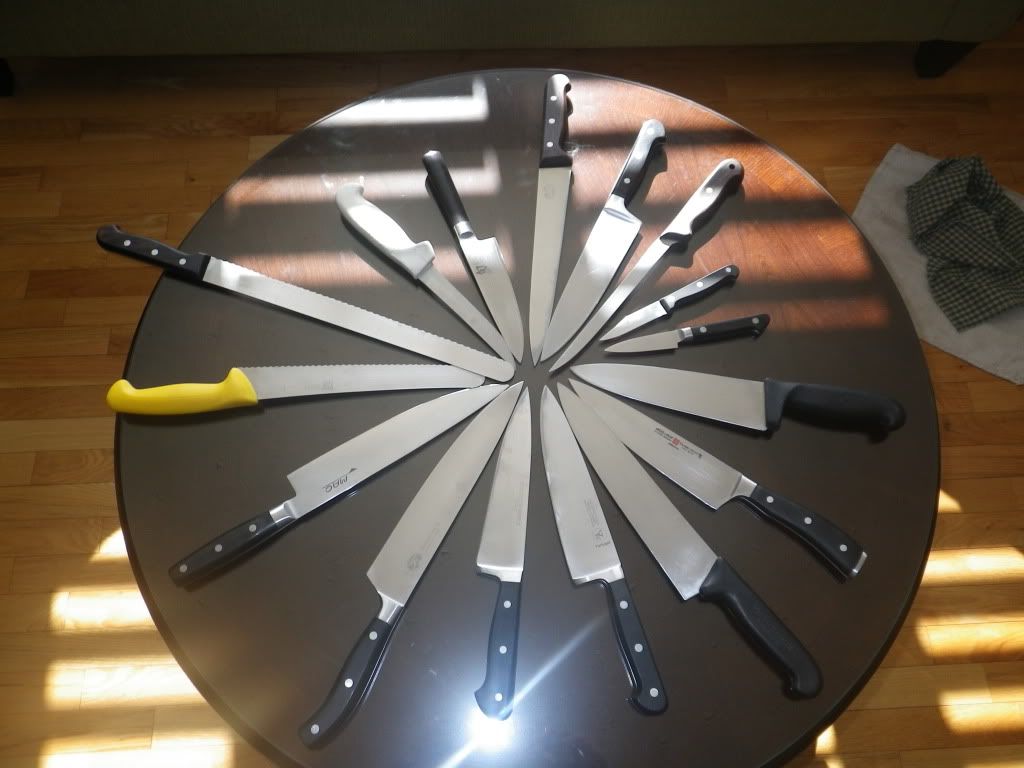
I understand that the block of 9 knives that you see at Costco or Walmart or other places is tempting, you can get 9 freaking knives for 100 bucks.  Here are the facts, the knives themselves are not that good, they are cheap and very soon you will have a set of dull knives. You will be constantly reminded of that 100 dollars you wasted. It's a trap folks, don't fall for it.

Instead of purchasing a block of cool looking knives, buy ONE good knife.  A single Chef's Knife from MAC, Grohmann, Wusthof, Henckels, Shun and Global, is likely better than that entire set of knives. (Keep in mind that not all these brands are created equal).

The knife in picture above is a Nakiri, (veggie knife) hand made in Japan, brutally sharp and cheaper to purchase than most high end Global and Shun knives. 

When you go buy a knife, you should be thinking also of how you are going to sharpen it. That is the mistake people make and I've been there. Regardless of how much you pay for a knife, it will be dull before long, or at least lose that crisp edge that some new knives have. 

Note that many new knives are not sharp in my opinion.

So, instead of thinking you are saving money buy buying 8 or 10 knives at once for the price of 1 knife, you are not, you are punishing yourself because soon all those knives will be dull. Even if they weren't, you don't all of those anyway.


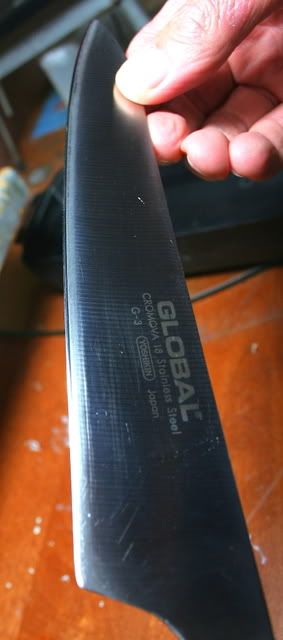
Here is a nice Global Chef knife, nothing special to be honest but this one knife is probably better than all of those knives in the block and isn't it easier to keep 1 knife sharp than a bunch of them. Globals are easy to sharpen and take a nice edge, they will hold the edge for quite a while but need to be re-sharpened 2-4 times a year depending on use. If this is the only knife you have, look at getting it sharpened 3 times a year at least and if that knife came to me for sharpening, that is $30.00...for the whole year. 


There are so many knives to choose from, I know it is difficult but the folks at Paderno or Cucina Moderna here are knowledgeable and will steer you in the right direction.

Now my next knife will come from Mr. Kevin Kent at Knifewear in Calgary and now in Ottawa. He sells exquisite Japanese hand made knives.
AWESOME KNIVES


Monday, 1 July 2013

BLING BLADES- Japanse Traditional Knives

Let's talk about Japanese knives and when say Japanese I am not referring to Shun, Global or MAC knives. Yes they are made in Japan but they not traditional Japanese knives.

The purpose of this Blog post is not to convince you that all your knives are inferior to these knives. At the end of the day, the best knife is a sharp knife. However, there is no doubt in my mind now after seeing these knives and using one, they can get an edge that few people have ever seen, especially in the Maritimes.

The Japanese knives I will speak of are the hand  made single bevel knives that are designed/used for a specific purpose. Paderno in Halifax is the only store that I personally know of where I can walk in and purchase one.

In Japan, there is trio of these knives that are the most common and most widely used, while there are many many different types, the Holy Trinity of Japanese Traditional Knives consists of:
  • The Usuba;
  • The Deba; and
  • The Yanagiba. 
Japanese Chefs depend on all of these knives and they come a massive variety of names and quality. You can buy one online for less than $100.00 and take your chance or  you can purchase a $3,500 Yanagiba and know that it is a treasure. Meticulously forged by a family who has spent their entire lives perfecting their knives and following in their fathers and grandfathers steps.

I believe that only the best chefs in Japan or in other parts of the world truly know how to use these knives. They are exceptionally sharp, yes sharper than any European or Canadian made knife and I will explain that a little later.

The link here will take you to the Korin website, Korin is in New York City and specialises in high end  knives, the one here is over $7,000.
Exceptional Yanagiba


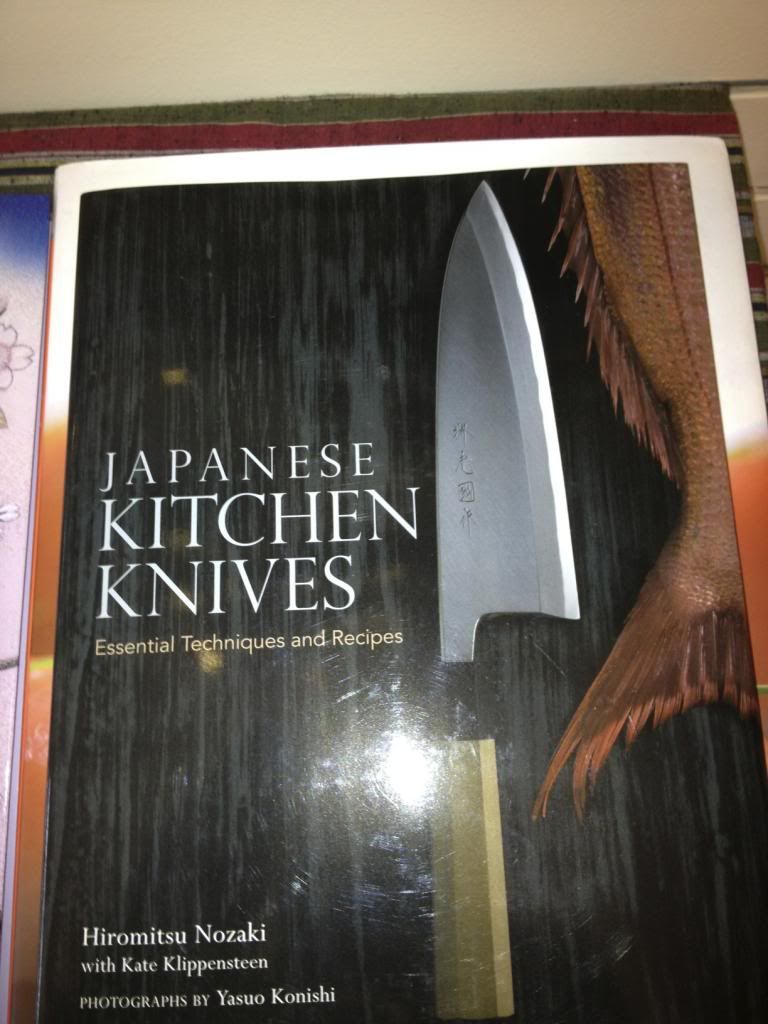
Let's talk about the three knives that are listed above. All of the images I have are from a wonderful book called Japanese Kitchen Knives Essential Techniques and Recipes by Hiromitsu Nozaki. I picked it up at The ikebana Shop on Quinpool Rd. (beautiful store). The book is awesome, beautiful illustrations and some very useful and interesting information.
Here it is:


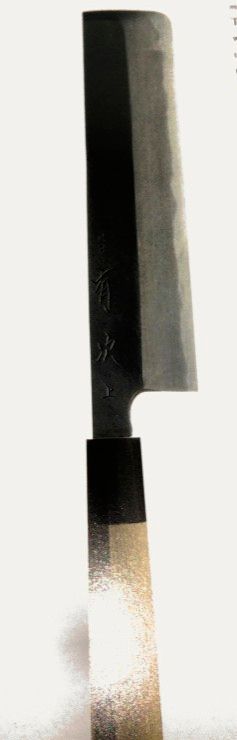
The Usuba. 
This is a vegetable knife:


Picture from Japanese Kitchen Knives by Hiromitsu Nozaki

Now if you gave me this knife as a gift, I would have no idea how to use it properly, i.e. use it to it's full potential. The book explains how apprentices spend years practicing with this blade. It seems pretty simple to me, it's just single  bevel knife. Have you ever seen so impossibly thin slices of vegetables that  seem, well they seem impossibly thin. This is the knife that is used for that and again, don't think that if you had this knife you are going to pull off some ridiculously impressive cutting achievements. However, you are going to look very cool trying.   The Nakiri knife that is easy to find here, Wusthof, Shun, Global, MAC and others make them. They are double bevel knives designed to push cut through vegetables. I have one and it is my wife's favourite knife.

I have never even had a Usuba in my hands......more on that later and on sharpening this beauties. 

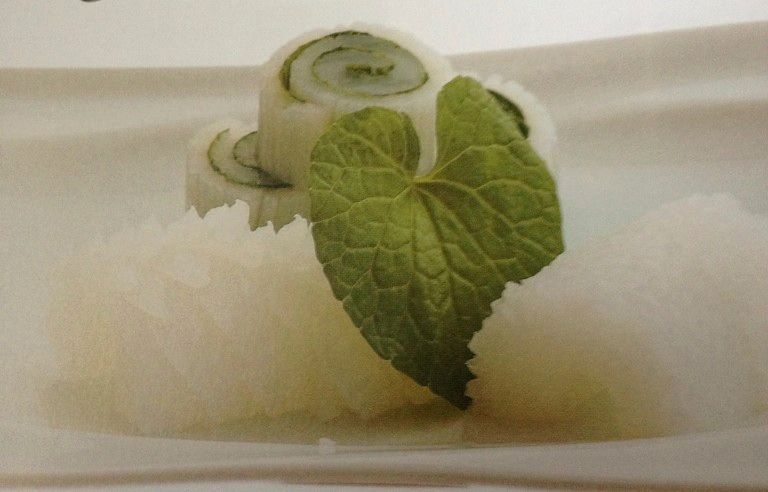
So this knife is for turning vegetables into works of art. Every Japanese dish is plated with purpose, the arrangement of the vegetables and protein is never haphazard, is is planned, it is art and does not come easily. 


Exquisite
Picture from Japanese Kitchen Knives by Hiromitsu Nozaki

Does the average Chef preparing traditional North American food need a Usuba. No, in fact I would say the average and above average chef doesn't know how to use a Usuba, just not a necessity. 

Ok lets move to the next knife.

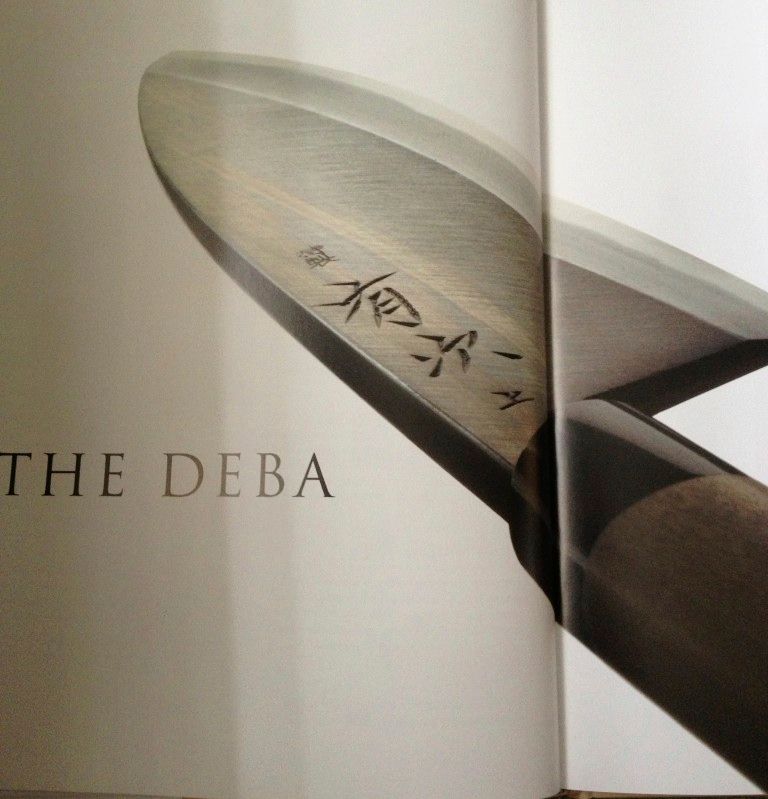
The DEBA

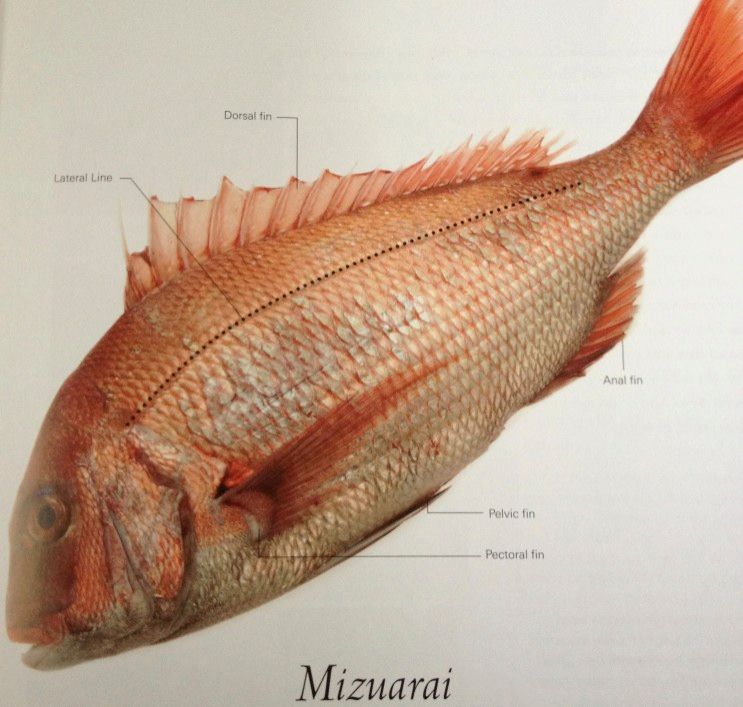
The Deba is a fish cutter, to be more precise, it is for breaking down a fish, it is a very strong knife, this is beast and is designed for  a specific purpose, breaking down  fish and filleting . Now if you have ever seen a Japanese chef cutting up a fish, you will astounded. It is a science, years of training and hundreds and hundreds of fish with this wonderful knife is needed to become the artist that some chefs are. 

Picture from Japanese Kitchen Knives by Hiromitsu Nozaki


The first thing I noticed about the MAC Deba I had in my hands at Paderno was the spine. It will blow you away, extremely thick compared to other knives,  this is the hammer knife, the strong one, built to slice through bone. Again, the single bevel and steel (more on that later) leads to startling edge,  if sharpened properly of course. This is one cool knife. It is also used for dressing poultry.


Picture from Japanese Kitchen Knives by Hiromitsu Nozaki

I don't own  a Deba yet but I do have one coming. I don't intend to use it to break down a fish, I am getting it to learn how to sharpen it.


Now we get to what think is definitely the coolest knife in the world the Yanagiba.

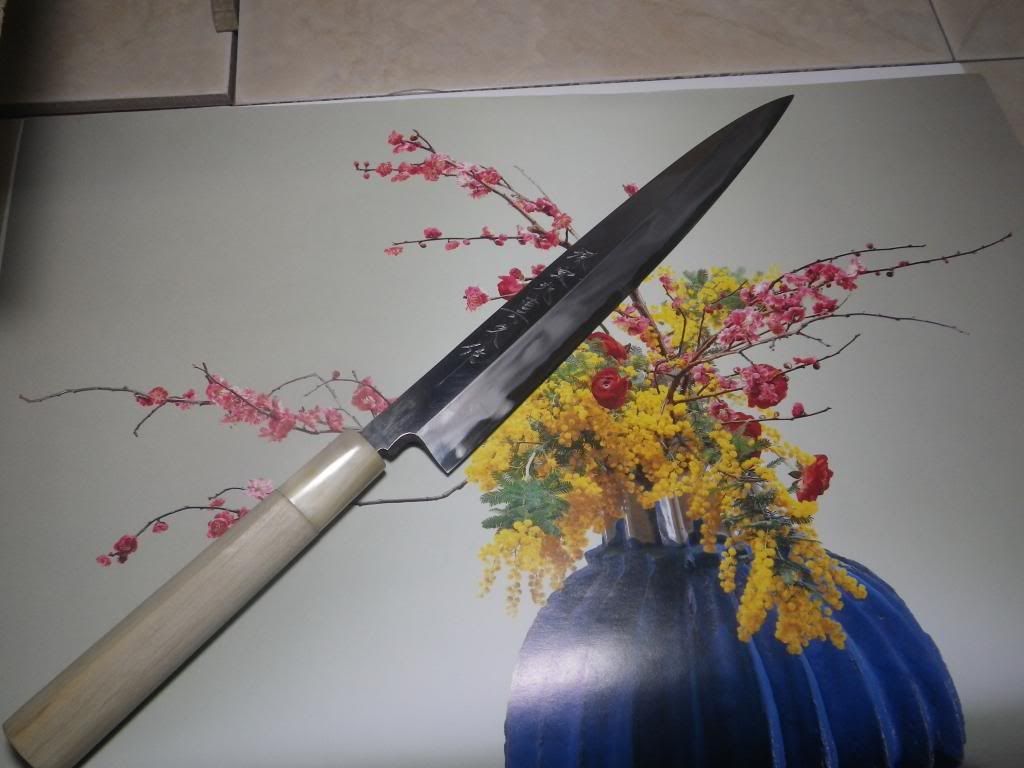
Malcolm Smith, the Manager of Paderno and kitchen knife expert was kind enough to let me play with a quite expensive MAC Yangiba. I can tell you that I have seen many sharp knives, I have not seen anything sharper than that Yanagiba. (After I sharpened it of course :) )

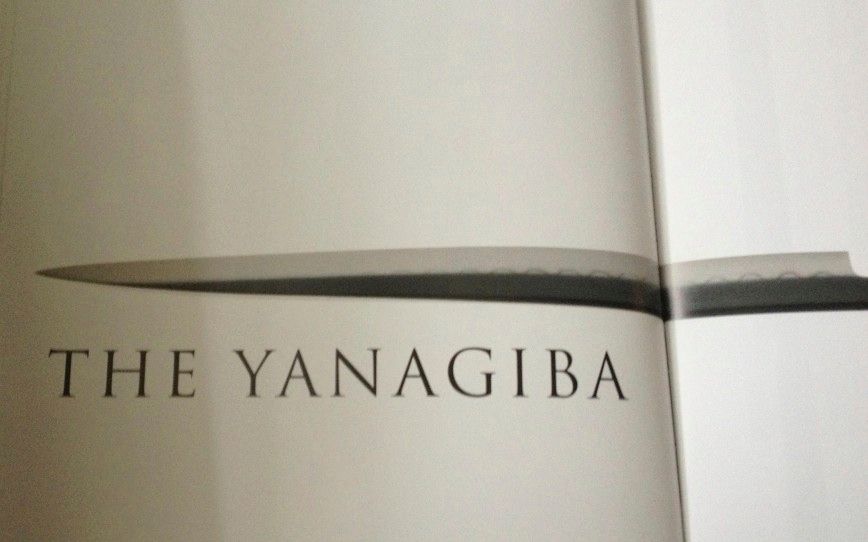
The Yanagiba:


This is a very long and  slender knife, professionals use a 14inch Yanagiba and a very specialized cutting technique, in  fact, those "in the know" have many techniques to create jaw dropping food. Seriously, in the right hands, you would not believe what a pro can do with this knife.
The main purpose of this knife is to slice Sashimi, raw fish. The knife is pulled through the sashimi, it is delicate and purposeful motion. 
Picture from Japanese Kitchen Knives Essential Techniques and Recipes

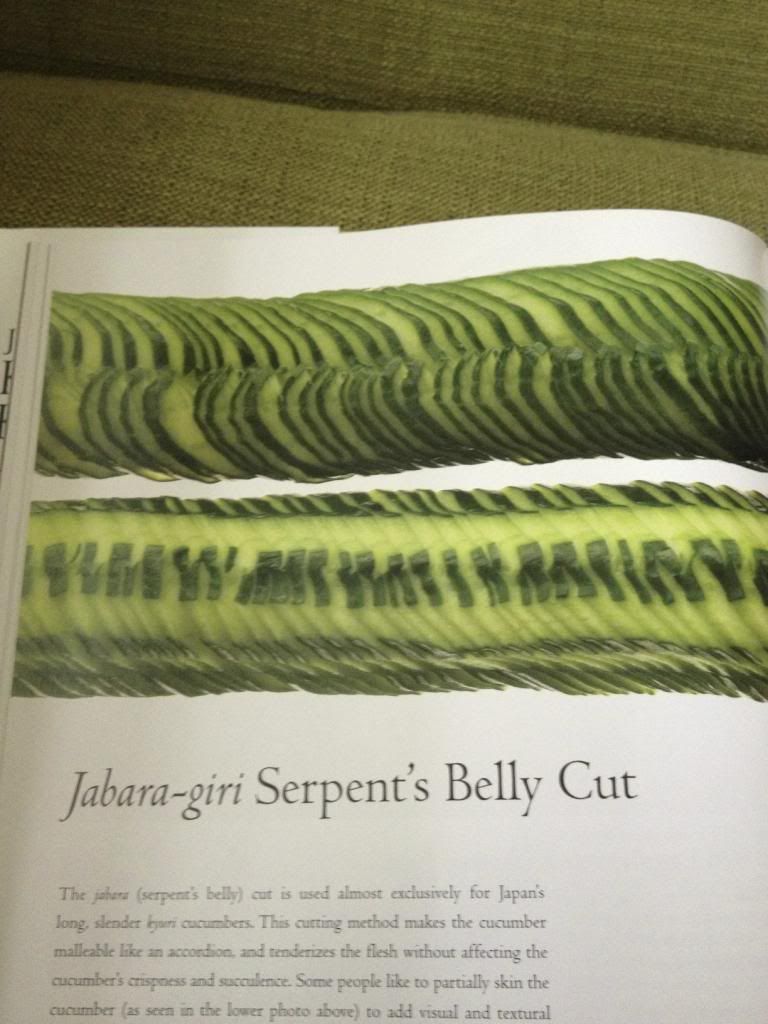
Now the picture above is absolutely stunning in the book, I only put it here to try and illustrate what the knife can do in the right hands.
MAC Yanagiba


What makes these knives so good and why would I want one?

While there are many factors when blended together create stunning and beautiful knives, I guess the key ingredient has to be the steel. Note of course that not all these knives are of the same quality. To get what I consider a decent one, a Yanagiba for example, the  minimum you would need to spend is $250.00.  

I won't bore you by talking about the steel but you need to know this is what makes the knives so special. I mean besides the fact that they are hand made by artisans and not mass produced like our Henckels and Globals. So besides that, the steel in these knives, and that is mostly all carbon is very hard. Our Wusthof and Global knives are quite soft in comparison. This does mean that they are inferior, I have Globals and Wusthof, I'm not putting these knives down. 

However because the steel is so hard, they can be sharpened and are sharpened at much acute angles and they can hold their edge much longer. So they are sharper and stay sharp longer.

The knives are thin, razor sharp and truly a joy to use.

Now these knives have not taken off in Canada like they have in the USA. Now I only know a couple of chefs, Peter Dewar, a gifted chef from the Valley has a couple and he was kind enough to let me sharpen them.

You will truly be amazed at how sharp these knives can get, I'm not kidding, remember, I couldn't care less if you had one, I'm not selling them, I just believe in them because I have seen them and used them.


There really is nothing like a sharp knife and when I say sharp, I don't mean out of the box, factory edge sharp, I mean water stone, hand sharpened sharp.

Does a sharp knife make you a better cook. Would having one of these knives, and you can get double beveled Japanese hand made knives somehow make you a better cook.

ABSOLUTELY.

Once you feel that thrill that a razor sharp knife can give you, it will enhance the joy of cooking for you, your senses will ignite, you'll be excited about cooking and that will motivate you to being a better cook.

Now.....you don't need one of these knives to feel that, I can sharpen your Grohmann and make it sharper than any knife that you likely have ever seen. You'll see what I mean.

I don't say this lightly, it's just science, it's the process of taking a knife edge over Japanese Water Stones, it just happens folks. 

I don't understand people, especially Chefs who use dull knives. There is no excuse, the food being served to people is effected by dull knives. 


I hope you enjoyed the little lesson on Japanese Traditional Knives. 

Yes, you can cut other things with a Yanagiba besides raw fish :)

Until next time.